
I have been running a small salon in Tyrone, GA since 2022. I had received a complain about not placing the change, receipt and credit card back into a customer’s hand. I spent the next 6 months reading to explore the reasons behind why some people get offended when cashiers do not return change into their hands. By delving into psychological, cultural, and personal factors, I have gained a deeper understanding of this phenomenon. I have studied what the brightest minds had to say, and I came to the conclusion that I might have been at wrong. I have also talked to many of my colleagues, and I have came to the decision not to change anything I have been doing.
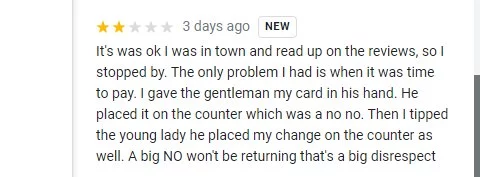
- Importance of Touch and Physical Contact
Human touch plays a crucial role in social interactions and communication. Research has shown that touch can convey a range of emotions, establish trust, and foster positive relationships (Hertenstein et al., 2006). When cashiers give change directly into customers’ hands, it provides a brief physical connection, reinforcing the social nature of the transaction. Not receiving change in this manner may feel impersonal, leading to a sense of disconnection and offense.
This changes a lot after Covid. We have been avoided direct contact for years, and some people haven’t adjusted back to a normal. Personally, I wasn’t trying to avoid physical contact. I place the cash on the counter because I had a camera pointing there. If there was a discrepancy, I would be able to go back and double check.
- Cultural Differences and Norms
Cultural variations influence our perceptions and expectations regarding interpersonal interactions. In some cultures, it is customary for cashiers to hand back change directly into customers’ hands as a sign of respect and acknowledgment (Hofstede, 1980). Deviating from these cultural norms can result in offense, as individuals may interpret it as a disregard for their cultural values and traditions.
Culture is much trickier to get. Where I am from (Vietnam), a man touching a married women could be considered offensive to her husband. A man touching an unmarried girl could be considered offensive to her dad. Of cause this isn’t universal. The younger generations born after 1990 have a much more relaxed view toward physical touch between two genders. I have been in the US for over a decade. I consider myself an American more than a Vietnamese. I don’t subscribe to the Vietnamese norms. Like I said, and I want to repeat myself, “I wasn’t trying to avoid physical contact.” Leaving the change/ credit card on the counter allow my hands to proceed with other parts of the transaction, like printing the receipt or signing the punch card.
- Sensation of Control and Ownership
Receiving change directly into one’s hands provides a sense of control and ownership over the transaction. Holding the physical currency reinforces the feeling of possession and autonomy. When cashiers do not return change in this manner, it can generate a perception of power imbalance and limit the customer’s agency, leading to feelings of offense (Gueguen et al., 2012).
Some people just need to feel in control.
- Psychological Priming and Behavioral Expectations
Psychological priming refers to the activation of mental associations and expectations through external cues. When individuals approach a cashier, they are primed to expect a specific sequence of actions, including receiving change directly into their hands. Deviating from this expected behavior disrupts the established mental schema, resulting in negative emotions and potential offense (Bargh et al., 2001).
- Perceived Personal Disrespect
Personal experiences and emotions influence how individuals interpret and react to situations. Some people may perceive the act of not receiving change into their hands as a sign of disrespect or indifference. They might believe that cashiers intentionally disregard their presence or consider them unimportant. This perceived disrespect can elicit offense and lead to negative evaluations of the overall service experience (Goffman, 1959).
Running a salon is tricky, and mentally exhausting. Sometimes, I am not only facilitating the transactions but also managing the appointment books, receiving phone calls, and directing work flow, all simultaneously. If some customers felt disrespected because I was trying to be efficient, then perhaps they were right: I really was trying to finish the transaction fast, so I could move on to the next thing. However, If I had spent more time at the register and failed at other activities, some others people might also be offended. I ain’t saying I was right. I am just saying it’s impossible to please everyone, all the time.
- Trust and Social Bonds
Transactional interactions provide an opportunity to build trust and foster social bonds between customers and cashiers. By exchanging money directly into customers’ hands, cashiers engage in a nonverbal communication that promotes a positive rapport. When this interaction is absent or perceived as lacking, it can weaken the sense of trust and hinder the establishment of a connection, resulting in offense (Fehr et al., 2008).
We live in a sad world when small businesses like myself are so afraid of quick change scammers that we need camera footages. My distrust wasn’t personal. I use the same procedure for every single customers. The cash and card must be on the counter for the camera to record.
- Emotional Significance of Physical Currency
Physical currency holds emotional significance for many individuals. Money is associated with hard work, value, and personal resources. When change is not handed back into customers’ hands, it can feel as though the transaction is reduced to mere numbers on a screen, devaluing the emotional significance of the exchanged currency. This detachment from physical money can trigger offense and dissatisfaction (Vohs et al., 2006).
I remember the day I got my first big tip. I was a bus boy at a restaurant. This old man came and accidentally spilled some water. I help him clean, and he tipped me $50. He hold this $50 bill discreetly in his hand, and transfer it to me by doing a hand shake. What he did was classy, discreet, and with so much respect. I wish I were able to inspire the same feeling in others. It’s not just the amount of money, but also the way the bill was handled.
- Expectations of Professionalism and Customer Service
Customer service standards play a pivotal role in shaping individuals’ perceptions of businesses and their experiences. Customers often expect cashiers to adhere to certain professional norms, including handing back change directly into their hands. When these expectations are not met, it can lead to a sense of disappointment, undermining the perceived quality of service and causing offense (Zeithaml et al., 2006).
I was consulted by old-timers in the field of customers services that a long, long time ago, handing change directly to customers hand were the proper training. I myself have never heard of it, or got called out by not doing so. I have been a cashiers in numerous establishments over 10 years, and this experience eluded me until recently. I had to questioned several respected authority in the field of hospitality before accepting I was at wrong. The finest establishments train their staffs to hand changes and receipts directly into customers’ hands. This is simply the truth.
- The Influence of Personal Values and Beliefs
Personal values and beliefs strongly shape individuals’ behaviors and reactions in various contexts. For some, personal values related to respect, courtesy, and manners hold significant importance. When change is not given back into customers’ hands, it may conflict with their personal values and generate offense. These individuals may perceive the action as a breach of social etiquette, leading to negative emotions (Rokeach, 1973).
- It might be possibly a racial thing.
I found no credible sources to cite
Conclusion
The act of handing back change directly into customers’ hands carries more significance than mere convenience. It encompasses elements of touch, culture, personal values, and expectations that influence how individuals perceive transactions and interpersonal interactions. By recognizing and understanding these factors, both customers and cashiers can foster better communication, improve customer experiences, and minimize offense. Ultimately, the power of human interaction lies not only in the transactional exchange but also in the emotional connection and mutual respect that can be fostered through simple acts like handing change back into customers’ hands.
References:
Bargh, J. A., Chen, M., & Burrows, L. (2001). Automaticity of social behavior: Direct effects of trait construct and stereotype activation on action. Journal of Personality and Social Psychology, 81(6), 1014–1027.
Fehr, E., Fischbacher, U., & Gächter, S. (2008). Strong reciprocity, human cooperation, and the enforcement of social norms. Human Nature, 13(1), 1–25.
Goffman, E. (1959). The presentation of self in everyday life. Doubleday.
Gueguen, N., Pascual, A., de Gail, M. A., & Courtois, R. (2012). Gratitude and the “Change-Reciprocity Effect” in retail settings. Journal of Applied Social Psychology, 42(5), 1132–1141.
Hertenstein, M. J., Holmes, R., McCullough, M., & Keltner, D. (2006). The communication of emotion via touch. Emotion, 6(4), 566–573.
Hofstede, G. (1980). Culture’s consequences: International differences in work-related values. Sage.
Papacharissi, Z. (2009). The virtual geographies of social networks: A comparative analysis of Facebook, LinkedIn, and ASmallWorld. New Media & Society, 11(1-2), 199–220.
Rokeach, M. (1973). The nature of human values. Free Press.
Vohs, K. D., Mead, N. L., & Goode, M. R. (2006). The psychological consequences of money. Science, 314(5802), 1154–1156.
Zeithaml, V. A., Bitner, M. J., & Gremler, D. D. (2006). Services marketing: Integrating customer focus across