Acrylics is the powder we use for fill-in and new set. It’s the most common, most popular choice when it comes to nails enhancement. I spent three weeks researching acrylic nails—not the techniques, but the history and the science of it.
The story of acrylic nails begins with an accident. In 1954, Dr. Frederick Slack, a dentist in Philadelphia, broke his thumbnail at work. Rather than simply bandaging it, he reached for materials he knew well: dental acrylic and aluminum foil. That was the very first new set in the world, by an unlicensed technician.
From Dental Offices to Nail Salons
Dr. Slack and his brother, Tom, founded Patti Nails, the first company to manufacture acrylic nail products. This is the very first time nails enhancement was done for beauty, not health. There was some problems with this acrylics: it yellows and becomes brittle really fast.
By the late 1970s, Dr. Stuart Nordstrom developed the liquid and powder system that most nail technicians still use today. His formulations addressed early problems—they didn’t yellow, didn’t become brittle with age. Nordstrom founded CND (Creative Nail Design) in 1978, and his contributions helped establish acrylic nails as more than a temporary fix. We still carry some CND products until this very day. There was the whole racial tension when my people (Vietnamese Immigrants) started doing nails and wanted to manufacturer acrylics by ourselves, but that’s another article, for a calmer time.
The chemistry itself is elegant in its simplicity. Mix a liquid monomer (ethyl methacrylate) with a powder polymer (polymethylmethacrylate), and you create a malleable paste. This mixture begins curing immediately when exposed to air, hardening within minutes into a protective layer that can last for weeks. Several other companies and manufacturers were born and push the art of acrylics so much further with GEL color. GEL color was perhaps the biggest improvement in beauty.
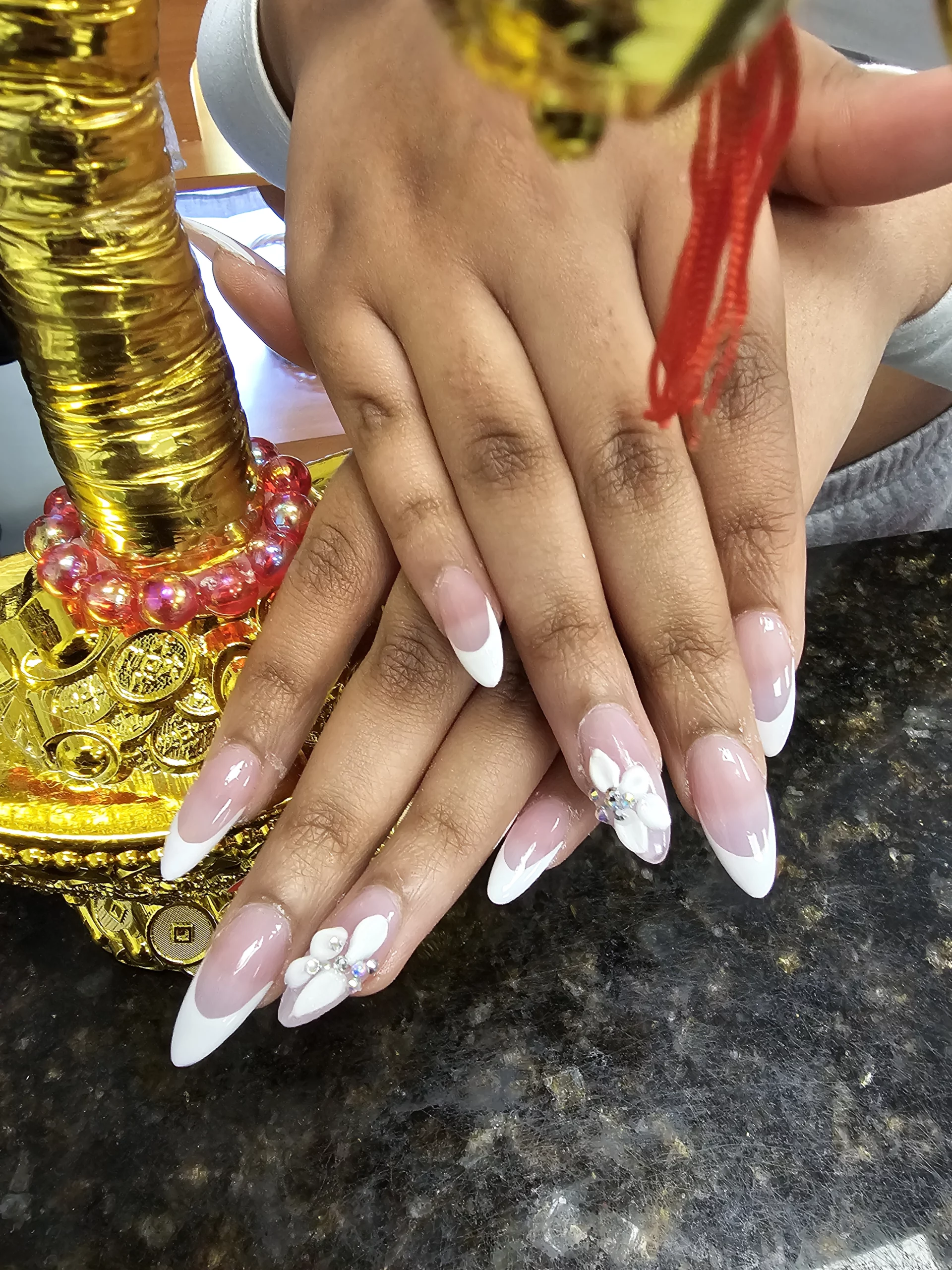
Orly opened in 1975 in LA. We don’t use Orly so I can’t say much. I rarely see Orly in Vietnamese nail salons. They are popular and established. Their color is decent, their acrylic powder is so-so. Jeff Pink invented the French Tip, something that goes well with everything. It was originally called “The Natural Look,” but it got way more popular in Paris than it did in America at the time, so people start calling it the French Tip. The French Tip was invented by an American.
OPI (Odontorium Products Inc.) came along in 1981. Some grandmas (now retired) claimed OPI powder was okish, but their colors was on a whole nother level compared to CND. Color variety wise OPI has the largest collection, with the most creative name. I love OPI, we carry a few of their SKU, the ones that no other company was able to replicate. Bubble Bath, Funny Bunny are some example. Their wholesale line some time randomly go out of stocks for months, which is why we chose to carry some other brand.
In 1981 Tammy Taylor Nails also opened and supposedly invented the Pink and White. It’s like French Tips but use powder instead of Gel color.
Since then there have been many more acrylics manufacturers, with quality very very similar to each other.
Currently (2026), Tyrone Nails carries CND acrylics, but every technicians have their own preferred brands, and everyone swear by their brands. Durability and usage across the brand are very similar, but the melting speed, curing time are slightly different. It’s actually very very annoying for a skilled tech to switch from one powder to another. It’s not uncommon for a self-respected technician to carry his or her own brand of powder, or to quit a nail salon who force this choice.
My brother Tom, like many techs, has his own secret formula. He mixed two brand of powder and have this soft white acrylic that melt the way he likes.
Giant brand like CND also have private labels. A LOT of the acrylic brands that came out after 2000s are actually made in the same factory, with the same formula. I know for a fact I could get a private TYRONE NAILS brand, had I wanted to and have the scale.
So, what I am trying to say is, it’s really up to the technicians, from the clients perspective, acrylic brands don’t really matter in 2027.
The Strengths: What Acrylic Does Well
After nearly seventy years in the industry, acrylic nails remain popular for reasons that extend beyond trends.
Durability. Acrylic nails can last six to eight weeks with proper maintenance. For clients with weak, brittle natural nails prone to breaking, this protective layer offers genuine relief. The strength isn’t just cosmetic—it’s functional. For those who work with their hands, acrylic provides a barrier against the small damages that accumulate through daily tasks. With the same thickness, acrylic is much stronger than anything else.
Versatility. The material can be shaped, filed, and molded to accommodate nearly any aesthetic preference. From subtle overlays that enhance natural nails to dramatic lengths and artistic designs, acrylic adapts to the client’s vision. This flexibility has made it the foundation for nail art that ranges from understated elegance to elaborate expression.
Accessibility. Acrylic services are widely available and generally cost-effective compared to some alternatives. The technology has been refined over decades, which means most experienced nail technicians are thoroughly familiar with proper application and removal techniques.
Immediate transformation. For clients who struggle to grow their natural nails to desired lengths, acrylic offers an instant solution. There’s no waiting, no hoping the nails will cooperate. The change is immediate and predictable.
The Weaknesses: What We Need to Acknowledge
Honesty requires us to discuss what acrylic asks of natural nails in return for these benefits.
The application process itself can be harmful. To ensure proper adhesion, the natural nail must be “prepped”—the top layer is filed to create a slightly rough surface. This process thins the nail. When done incorrectly or too aggressively, it can weaken the natural nail significantly.
Chemical exposure. The substances involved—monomers, polymers, solvents—carry distinct odors and require proper ventilation. Both technicians and clients are exposed to these chemicals during application. Some individuals develop sensitivities or allergic reactions, particularly to acrylates. Symptoms can include redness, itching, swelling, and in some cases, respiratory irritation.
Maintenance is non-negotiable. Acrylic nails require fills every two to three weeks as natural nails grow. Neglecting this maintenance can lead to lifting, which creates spaces where moisture and bacteria can accumulate. These trapped environments can lead to fungal infections or other nail problems.
Removal must be done properly. Picking, peeling, or prying off acrylic nails causes significant damage to the natural nail plate. Professional removal involves soaking in acetone—a harsh solvent—for an extended period. Even with proper technique, natural nails often emerge thinner and weaker, requiring months to fully recover.
The risk of improper products. Not all acrylic systems are created equal, there are cheap knock off I could get from Alibaba. I ordered some, tried them and I didn’t like them. These cheap powder leaves a small gap between the nail bed and itself. This gap is a space that might trap water and you know what thrive in water? FUNGUS!
The very steep learning curve. Acrylic is by far the hardest material to master. Its melting speed and cure time depends on several variables: the melting liquid, the temperature, the slope of the nail bed, even the shape of the brush [The brush is a whole world of choice by itself]. Shaping acrylic takes about 2 years to learn, 10 years to master, and a lifetime to perfect.
The MMA Problem: Why We Must Talk About This
In my research, I discovered something that every client deserves to know about: the difference between MMA and EMA.
Methyl methacrylate (MMA) was the original monomer used in early acrylic applications, borrowed from dental work. In the early 1970s, the FDA received numerous complaints of injuries: fingernail damage, deformities, contact dermatitis. The FDA took action to remove products containing 100 percent MMA from the market, though technically, no federal regulation specifically prohibits its use in cosmetics.
The safer alternative, ethyl methacrylate (EMA), has a larger molecular structure that makes it less able to penetrate body tissue. But here’s what troubles me: MMA costs approximately one-third the price of EMA. A gallon of MMA averages around $65, while a gallon of salon-approved EMA liquid runs $200-$300.
Some salons still use MMA to cut costs. The warning signs include an unusually strong odor that doesn’t smell like typical acrylic liquid, nails that are extremely hard and nearly impossible to file, and enhancements that won’t soak off in acetone—they just get shiny. These nails often require prying or drilling to remove, which causes severe damage.
Several states have banned MMA in nail salons. California recently designated nail products containing MMA above certain concentrations as a Priority Product, recognizing that exposure may contribute to significant adverse health impacts, particularly for nail salon workers, pregnant individuals, and children.
We use only EMA-based systems at our salon. The cost difference is real, but so is our responsibility to our clients’ health. We love you, we would rather lose some customers than using harmful product.
The Question of Natural Nail Health
The relationship between acrylic nails and natural nail health is complex. When applied correctly by trained professionals and maintained properly, acrylic should not cause permanent damage to natural nails. The key word is “should.”
The reality is more nuanced. Even with proper application, the preparation process removes some of the natural nail’s top layer. The chemicals involved can dry out the nail and surrounding skin. And the weight of extensions can stress the nail plate, particularly at the point where natural nail meets acrylic.
After so many sessions, natural nails often need time to recover—sometimes six months or more. During this recovery period, the nails may appear thin, weak, and prone to peeling or breaking. This isn’t necessarily permanent damage, but it is real impact that requires healing time. Sometimes, if I see the nails being too thin, I recommend customers to switch to DIP powder or take a break.
What This Means for Our Clients
We believe in acrylic nails. We offer them, we perfect them, and we stand behind the artistry they enable. But we also believe in informed consent.
When a client sits in our chair asking about acrylics, we talk about more than the beautiful final result. We discuss the maintenance commitment. We explain proper removal. We show them our EMA-based products and explain why we’ve chosen them despite the higher cost. We talk about taking breaks between sets to let natural nails recover.
The goal isn’t to discourage anyone from choosing acrylic nails. The goal is to ensure that choice is made with full understanding of what’s being asked of the natural nails in exchange for the benefits acrylic provides.
The Evolution Continues
Acrylic technology hasn’t remained static since Dr. Slack’s broken thumbnail in 1954. Formulations have improved. Application techniques have been refined. Safety standards have been established, even if enforcement varies.
The industry has also introduced alternatives: gel systems, dip powders, polygel formulations. Each has its own profile of benefits and considerations. None is universally “better”—they’re simply different tools for different needs and preferences.
What remains constant is the need for education, for technicians and clients alike. The chemistry behind these products matters. The technique of application matters. The quality of materials matters. The commitment to proper maintenance matters.
A Note on Beauty and Truth
True beauty is rooted in connection. That connection requires honesty.
When someone chooses to enhance their nails, they’re not just making an aesthetic decision. They’re entering into a relationship with the materials involved, with the maintenance required, with their own natural nails. That relationship works best when built on complete information rather than marketing promises.
Acrylic nails have earned their place in the beauty industry through nearly seven decades of refinement and use. They solve real problems for real people. They enable artistry that wouldn’t otherwise be possible. They provide protection for weak nails and immediate length for those who want it.
But they’re not without trade-offs. Understanding those trade-offs—the preparation process, the chemical exposure, the maintenance requirements, the recovery time needed—allows for better decisions and better outcomes.
At Tyrone Nails, we’ve built our practice on the principle that sophistication and honesty aren’t opposing values—they’re complementary ones. We can create world-class nail art while being straightforward about the science and care involved. That’s not just good business. It’s respect for the people who trust us with their nails, their time, and their well-being.
If you have questions about acrylic nails, proper maintenance, or whether they’re the right choice for your natural nail health, we’re here to talk. Not to sell, but to help you understand your options. That’s what thoughtful service looks like.